







Why does a Wingamm cost more than a van? The right comparison is not what you think.
When approaching the world of compact campers, one of the most common questions is:
“Why does a Wingamm camper cost more than a van of the same size?”
The answer is simple: Wingamm is not a van. It's a semi-integrated premium camper, built with a completely different philosophy and technology.
Comparing it to a camper van just for length is like comparing a hotel suite with a hostel: same size, but radically different services, materials and comforts.
Here are the concrete differences:
-
Thermal insulation: vans use 10-20mm DIY panels; Wingamm uses professional integrated polyurethane, without compromise.
-
Climate comfort: in a van the internal temperature varies only by ±5°C compared to the outside; in a Wingamm they are easily reached ±15°C, even in winter.
-
Travelling noise: 75-80 dB on a van, versus the 60-65dB of a Wingamm monocoque.
-
Structure: the vans have sheet metal and thermal bridges; Wingamm is the only one with a fiberglass monocoque, without infiltrations or dispersions.
-
Maintenance: vans require frequent checks for leaks; Wingamm is free from structural maintenance.
The correct comparison
A Wingamm 5.4 meters offers a level of isolation, silence and comfort equal to 6.5-metre semi-integrated campers.
It should therefore not be compared with a 5.4 metre van in terms of price or size, but in terms of user experience and build quality.
Those who choose Wingamm don't just want a compact camper, they expect the best in every season.
Let me know if you want to add a FAQ block, a visual table comparison or an English version.
You said:
ChatGPT said:
Perfect, here's one extended version of over 600 words, SEO optimized and ready for publication on a blog or a page of the Wingamm website. The article includes relevant keywords (e.g. compact premium camper, difference between van and camper, monocoque in fiberglass, four season camper) and follows a clear structure with H2 and H3 headings.
Why does a Wingamm cost more than a van of the same size? A fair comparison goes beyond numbers.
One of the most frequently asked questions among those who begin to explore the world of compact campers is:
“Why does a Wingamm camper cost more than a van of the same size?”
It's a legitimate question, especially if you're just comparing spec sheets on paper. But it's also a question that comes from a very common misunderstanding: thinking that a Wingamm is comparable to a camper van just because it has the same length.
Actually, Wingamm is not a van. It is a compact semi-integrated camper, designed with premium standard, designed for travel all year round with maximum comfort, silence, insulation and durability.
To understand the real value, you need to change your perspective.
Van vs Camper Wingamm: It's not just a question of size
Compare a 5.4 meter van with a Wingamm Oasis 540.1 of the same length is like comparing a hotel suite with a room in hostel: the surface can be the same, but the experience is completely different.
Let's see the differences point by point.
1. Professional thermal insulation
-
Camperized van: internal insulation often made with glued panels, reduced thicknesses (10-20 mm), handcrafted result.
-
Wingamm: isolation in integrated polyurethane foam directly into the monocoque, with thickness and uniformity of an industrial vehicle, free of thermal bridges.
Translated into practice? Traveling in a van in winter requires layers upon layers. In a Wingamm you can relax in a T-shirt.
2. Real climate comfort
-
From: the internal temperature follows the external environment with an average difference of ±5°C.
-
Wingamm: the advanced insulation allows for differences of even ±15°C, maintaining constant comfort in all seasons.
A true four-season camper, designed for travel even in the snow or under the summer sun.
3. Silence on the move
-
From: 75-80 decibels while traveling, with vibrations and sheet metal noises.
-
Wingamm: 60-65 dB, thanks to the monocoque structure, quality assembly and thermal/acoustic separation.
The result is a more relaxing, less tiring driving experience, closer to that of a luxury car than a commercial vehicle.
4. Structure: monocoque vs sheet metal
-
From: the body is that of a Fiat or Ford commercial vehicle, adapted to the camper setup. The panels are cut, insulated and covered.
-
Wingamm: monocoque in fiberglass, a single body, without joints or cracks. No thermal bridges, no risk of infiltration.
This property is unique on the market and protects the vehicle over time from humidity, mold, structural breakages and hidden maintenance costs.
5. Almost zero maintenance
-
Camperized vans: require regular checks for infiltrations. Even a small defect can become a big problem.
-
Wingamm: thanks to the monocoque, no periodic checks are required for infiltrations. It is an investment that protects your time and money.
The right comparison: Wingamm vs. 6.5-meter semi-integrated
Those who choose a van often do so for reasons of practicality and compactness. But if you are considering buying a compact vehicle and are looking at 5.4-meter models, the correct comparison for a Wingamm is not with other vans, but with larger semi-integrated campers.
Why?
-
Why Wingamm offers a level of comfort, insulation and silence which is only found on vehicles over 6 meters.
-
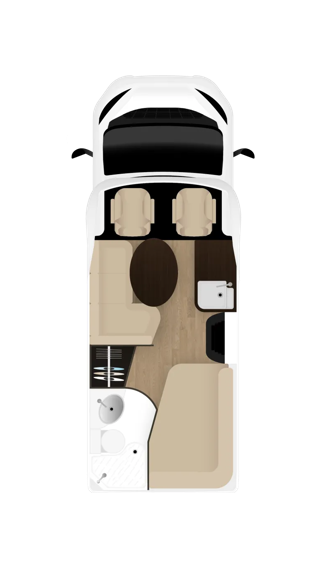
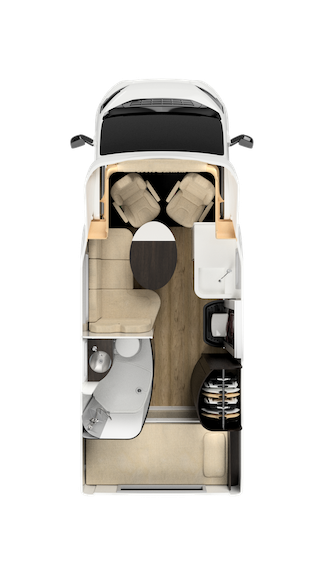
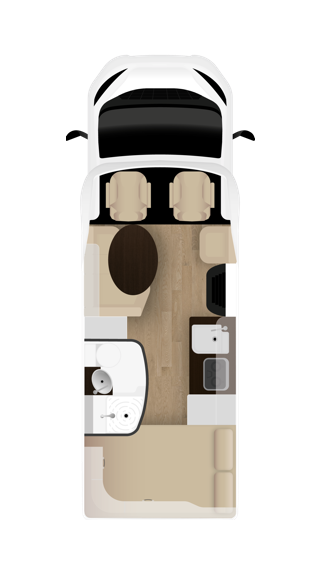
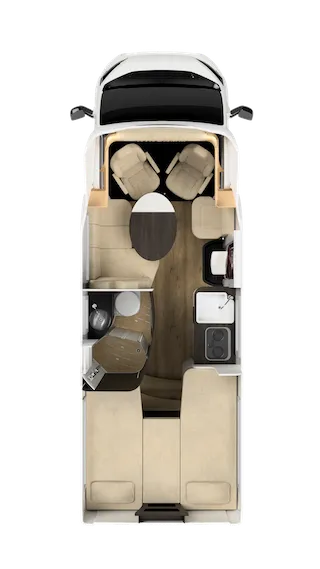
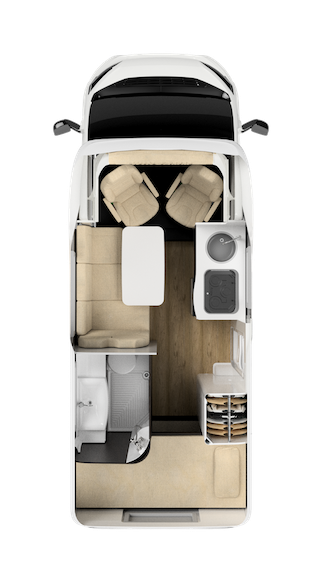
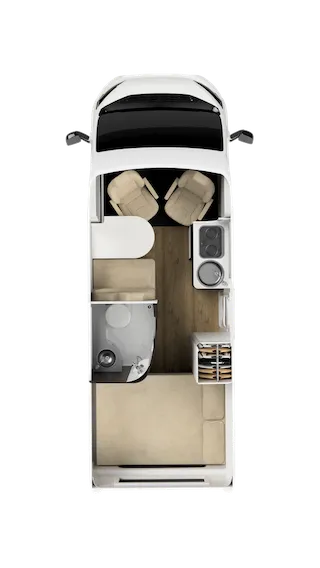
Because in 5.4 meters it manages to offer separate bathroom with real shower, ergonomic kitchen and real comfortable beds, not makeshift solutions.
-
Because it is a compact camper without compromise.
In short: it costs more because it is worth more
A Wingamm camper costs more than a van, yes. But it doesn't cost too much: it costs the right amount for what it offers.
It is not a compromise between freedom and comfort. It is a conscious choice for those who seek the best in every detail:
-
Those who want to travel all year round, in any weather conditions.
-
Those looking for an agile, yet elegant and durable solution.
-
Who wants a camper that really lasts 20 years, no surprises.
Discover the Wingamm range
Visit wingamm.com and find the right model for you.
If you are looking for a premium compact camper, designed to last and surprise, the answer is only one: It's not a van. It's a Wingamm.