

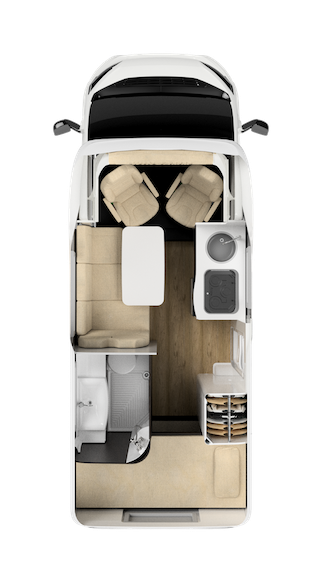
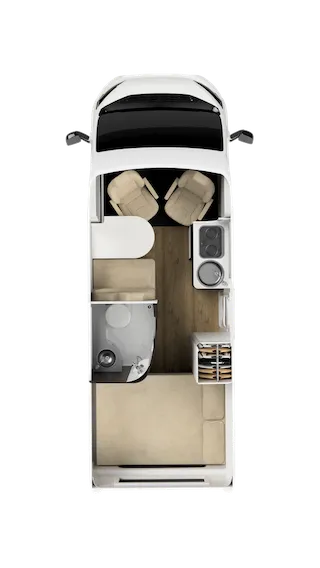






Van camper or camper van, camper van, van or camperized van, fitted van, camper-van, there are many ways to call these vehicles which basically consist of vans equipped for sleeping.
They offer the maneuverability and functionality of a second car, promising the freedom and comfort of a camper for holidays and leisure, all at an affordable price... but is that really the case?
Campervans are very popular today among young people, but not only... They're also highly sought after by couples, families with older children, or even just one child. What are they?
Camper vans are traditional vans furnished internally with beds and a kitchenette, sometimes with the addition of a small bathroom. The furniture is attached to the van's standard metal body, which externally remains virtually identical to a work vehicle.
The external dimensions and driving characteristics of the converted van are therefore approximately those of a standard van, but are the functionality and comfort comparable to those of a real camper?
What are the 9 points to consider when choosing between an RV and a compact camper?
1. Easy driving and easy parking
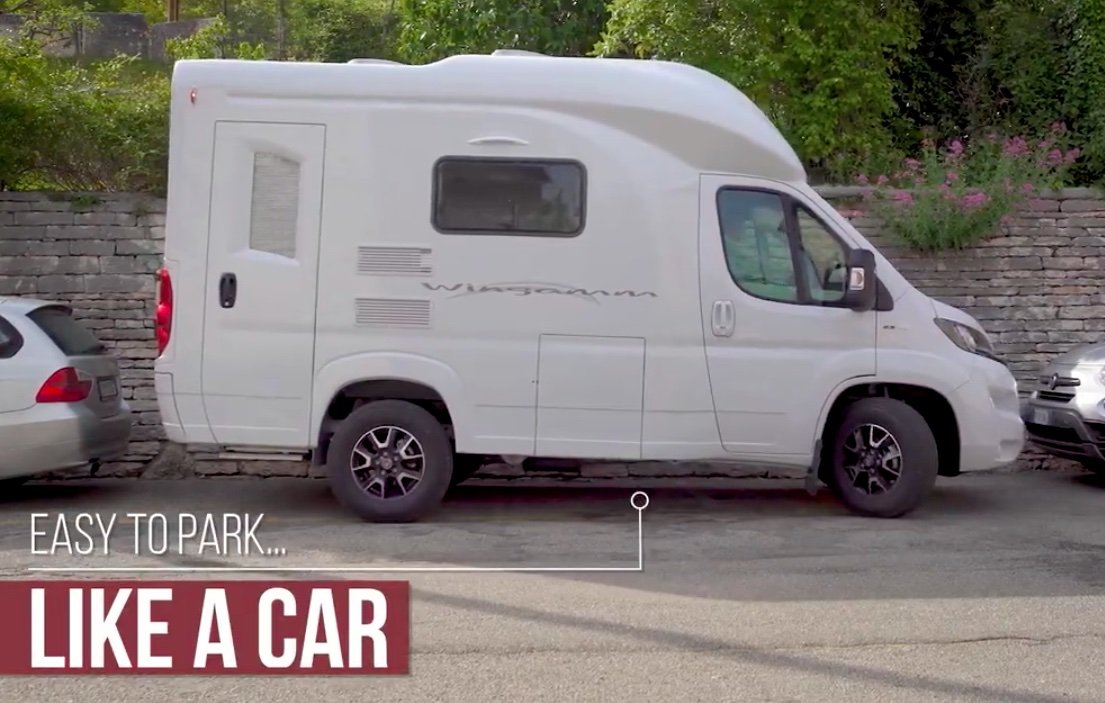
Certainly the external dimensions of the vehicle are relevant for parking in street stalls and covered car parks, as well as for maneuvering in narrow city streets or mountain curves.
In this sense, Camper Vans are more compact than most motorhomes because they maintain the dimensions of the original van. However, semi-integrated motorhomes of the same size or even smaller are available such as our Oasi 540 which has a length of only 5.40m compared to the abundant 6 meters of the most common van motorhomes.
Regarding width, it's important to note that the measurements relevant for road traffic are those that include the space occupied by the rearview mirrors. Therefore, it's important to consider that every additional centimeter of width over and above the tractor unit's width, but less than the maximum width including the mirrors, allows for greater interior space without compromising maneuverability.
As regards the handling of the vehicle and the ease of maneuvering, in addition to length, the other variable to be taken into great consideration is the wheelbase of the vehicle.
The longer the pass, the more demanding the maneuvers are, not only in the parking phase, but also in tackling the mountain bends, the narrow streets of the villages and the streets of the city.

2. Climate Comfort
The vans have the same external metal body as the vans and are therefore poorly insulated, heating up a lot in summer and quickly dissipating heat in winter. Some Camper Vans also have an extendable roof (popup) in fabric for the sleeping area, which further compromises the thermal seal. This means that camperized vans are more like cars with the possibility of sleeping than real recreational vehicles. They are usually used for short holidays or weekend trips, especially in mid-seasons, during which the milder climate allows you to perceive the poor thermal resistance less.
The most luxurious and expensive camper vans are insulated internally with special panels, but the structure of the body and doors makes it practically impossible to eliminate thermal bridges, and the insulation is not as efficient as that of semi-integrated camper vans.
Traditional semi-integrated motorhomes composed of assembled panels have greater insulation performance and are therefore more comfortable even in summer and winter, but they cannot completely eliminate thermal bridges and the assembled structure presents problems relating to infiltrations and molds.
The Wingamm monocoque campers are instead made of a single sandwich shell of materials that do not conduct heat: fiberglass and the best insulating material on the market (polyurethane foam).
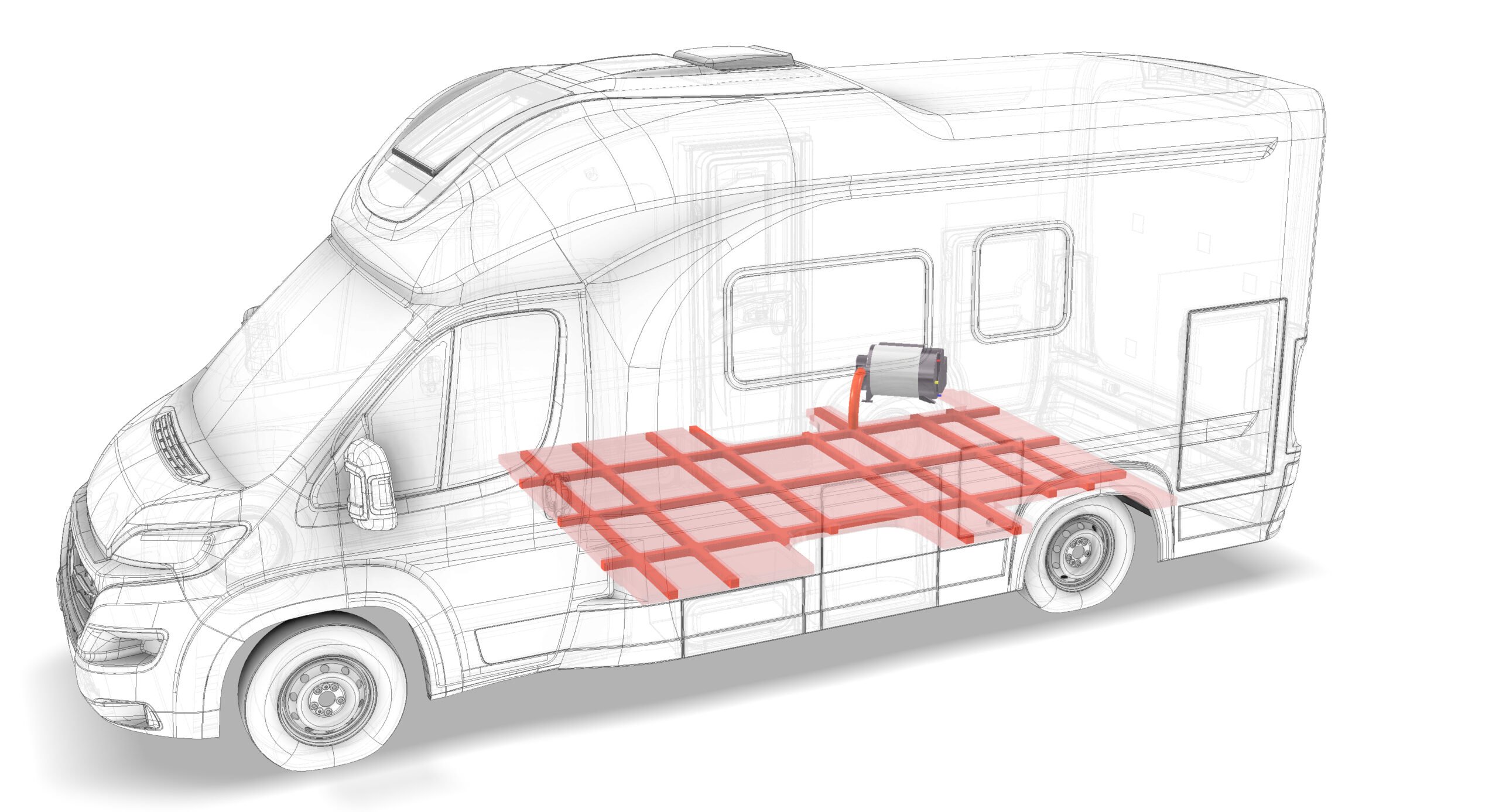
There is no heat exchange between the inside and the outside and the monocoque acts as a thermal and acoustic shield, guaranteeing efficiency and savings even in air conditioning. For greater comfort in winter, there is also an exclusive patented underfloor heating system that allows you to never get cold feet again.
The Wingamm campers also have the entrance door and the lockers in fiberglass, while the vans have a sliding door which is really unsuitable and uncomfortable for the winter traveler: to avoid letting out all the heat he is forced to use the front doors.


3. Habitability and interior spaces
As seen above, both in the camper and in the van, the reduced length is essential in terms of handling and to enjoy the possibility of parking on the street.
The width of the vehicle, on the other hand, has a much smaller impact on driving and only becomes relevant in the tightest parking spaces. This factor, however, is crucial for ensuring adequate interior space.
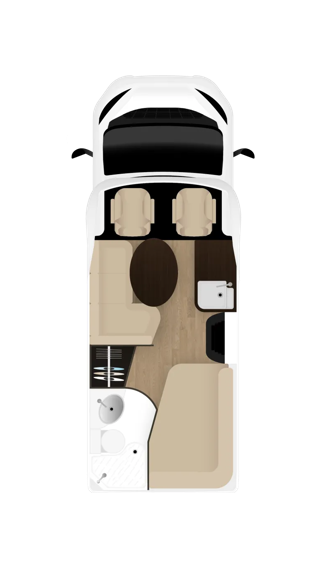
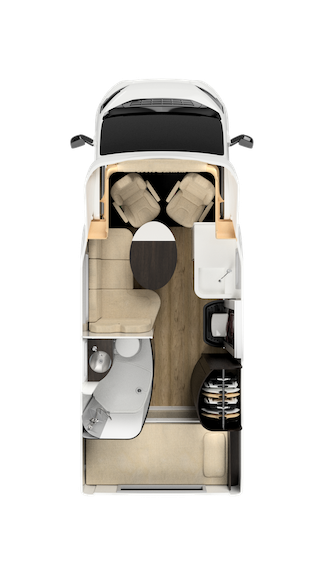
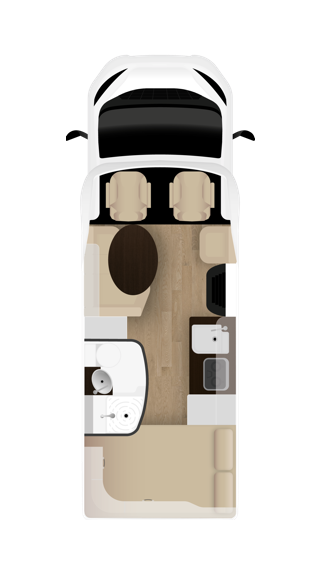
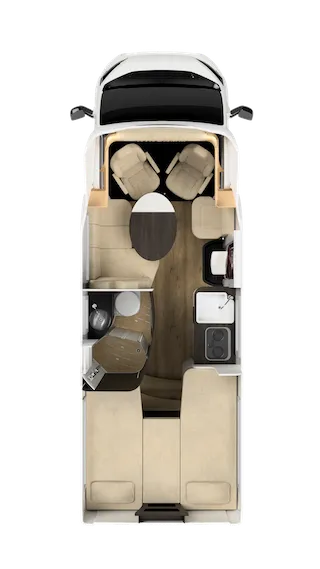
Camper vans, as we've seen, retain the same external dimensions as their predecessors, and therefore have very limited interior space, especially when the van is insulated with internal panels. This makes it difficult to appropriately and evenly distribute the areas typically most useful during a vacation: dinette, kitchen, bathroom, and sleeping area.
For more than 40 years Wingamm has been studying the best layouts, designing all the furnishings and using exclusive patented technologies to optimize every available cm3 to give users comfort, spaciousness, containment and services.


4. Bathroom and tanks
The bathroom, extremely important for longer vacations, must be spacious and functional. The cheapest camper vans don't have one at all, while the more sophisticated ones offer very small, "interlocking" solutions with awkward, movable toilets, tiny sinks, and no dedicated space for a shower. Campers generally offer more suitable and functional bathrooms. At Wingamm, even in the smallest vehicles, the bathroom is always very spacious and the shower area is always separate, without having to move the sink, toilet, or any other walls. All moving parts, in fact, make a lot of noise during the trip and can be damaged.
Van tanks are housed inside the passenger compartment and are therefore small, impractical to maintain, take up storage space, and pose safety issues, especially when it comes to storing gas cylinders.
In Wingamm, the tanks and gas are located outside the living area and are always insulated. They're housed under the floor, leaving all the space in the chest or under the beds completely free.

